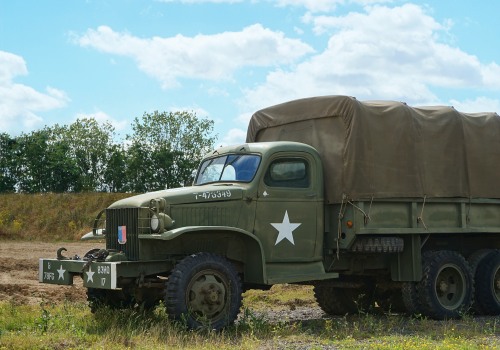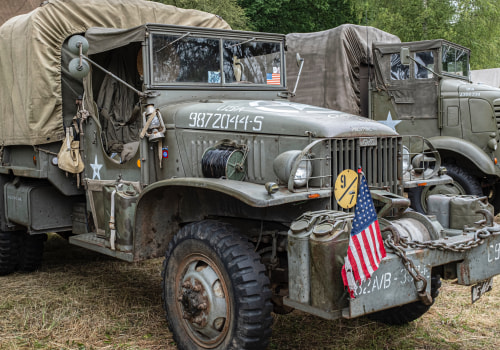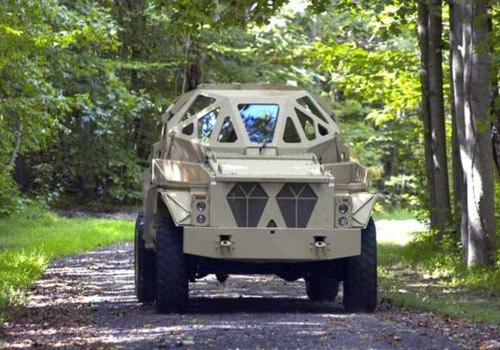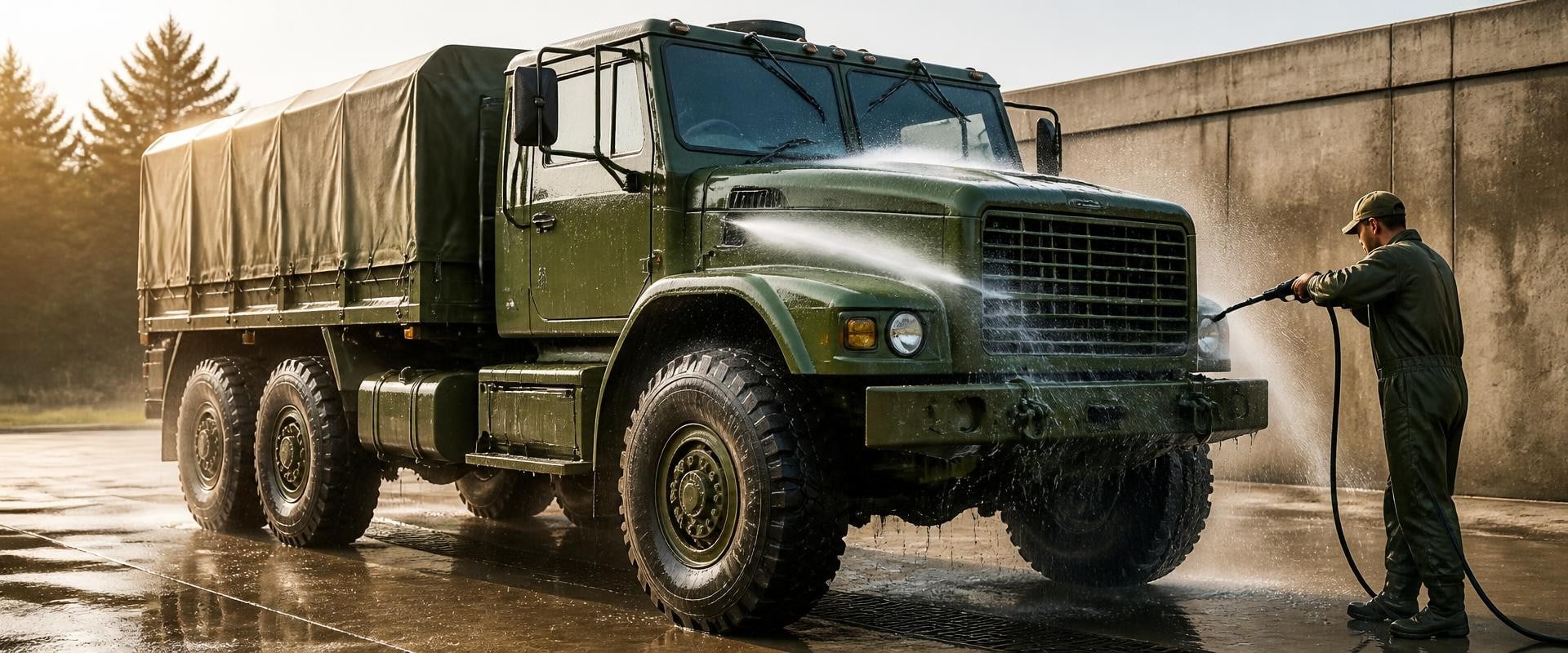
Military trucks are built to operate in demanding environments, but rugged construction does not make them immune to the effects of dirt, mud, road grime, salt, dust, and other contaminants. Vehicles that spend long periods on highways, training grounds, construction areas, or rough terrain can quickly accumulate buildup across body panels, wheel wells, undercarriages, and other exposed components. Regular washing helps remove these materials before they become heavily embedded. Even when a truck is designed for durability, keeping exterior surfaces clean can support long-term maintenance and make it easier to identify developing issues that might otherwise remain hidden beneath layers of grime.
Removing Mud and Road Residue
Mud and road grime can cling to lower body panels, bumpers, wheels, suspension areas, and undercarriage components. When these materials are allowed to remain for extended periods, they may trap moisture against metal surfaces. Regular washing helps clear away this buildup and allows important areas to dry more effectively. Military trucks used on unpaved roads may require more frequent cleaning because thick mud can collect quickly around wheel wells and underneath the vehicle. A consistent wash routine, whether handled through fleet maintenance or a suitable facility such as Drew's Car Wash, can help keep exterior surfaces easier to inspect and maintain.
Reducing Exposure to Salt and Corrosive Materials
Road salt and other deicing materials can be particularly damaging when they remain on metal surfaces. Military trucks operating in cold climates or traveling through areas where roads are treated during winter may experience repeated exposure. Salt mixed with moisture can contribute to corrosion over time, especially around the undercarriage, frame, fasteners, and wheel areas. Thorough washing can remove much of this residue before it has the opportunity to remain on vulnerable surfaces for long periods. Paying extra attention to the underside of the vehicle can be especially valuable after driving on salted roads.
Making Inspections Easier
Clean vehicles are generally easier to inspect. Dirt and grease can conceal small cracks, rust spots, loose hardware, fluid leaks, damaged paint, or other maintenance concerns. Washing a military truck regularly gives operators and maintenance teams a clearer view of exterior components. Detecting issues early can make routine repairs easier to manage and may help prevent minor problems from developing into more complicated maintenance needs. This is particularly important for fleet vehicles that must remain dependable and ready for frequent use.
Protecting Paint and Exterior Coatings
Military trucks may have specialized paint, protective finishes, or coatings designed to withstand challenging conditions. However, contaminants such as bird droppings, tree sap, insects, industrial residue, and road debris can still affect these surfaces if they are left in place. Routine washing removes potentially damaging materials and can help preserve the condition of protective coatings. Proper cleaning techniques are important because overly harsh chemicals, stiff brushes, or unsuitable equipment may cause unnecessary wear. Maintenance teams should follow manufacturer recommendations when selecting cleaning products and methods.
Keeping Wheels and Undercarriage Cleaner
Wheels, tires, and undercarriage areas experience constant exposure to road debris. Mud, gravel, grease, and other substances can accumulate around suspension components and wheel assemblies. Removing this buildup can improve visibility during inspections and make servicing these areas less difficult. Washing should be thorough enough to reach hard-to-access locations without directing excessive pressure toward sensitive electrical connectors, seals, or components that require special handling.
Supporting Long-Term Vehicle Care
Regular washing is a simple but valuable part of military truck maintenance. It does more than improve appearance by helping remove corrosive residue, heavy mud, road grime, and contaminants that can interfere with inspections or affect exterior finishes. The appropriate cleaning frequency depends on operating conditions, climate, road exposure, and how often the truck is used. By combining routine washing with scheduled mechanical inspections, protective coatings, and prompt repairs, operators can help maintain cleaner surfaces, improve visibility of key components, and support the long-term condition and serviceability of military trucks.