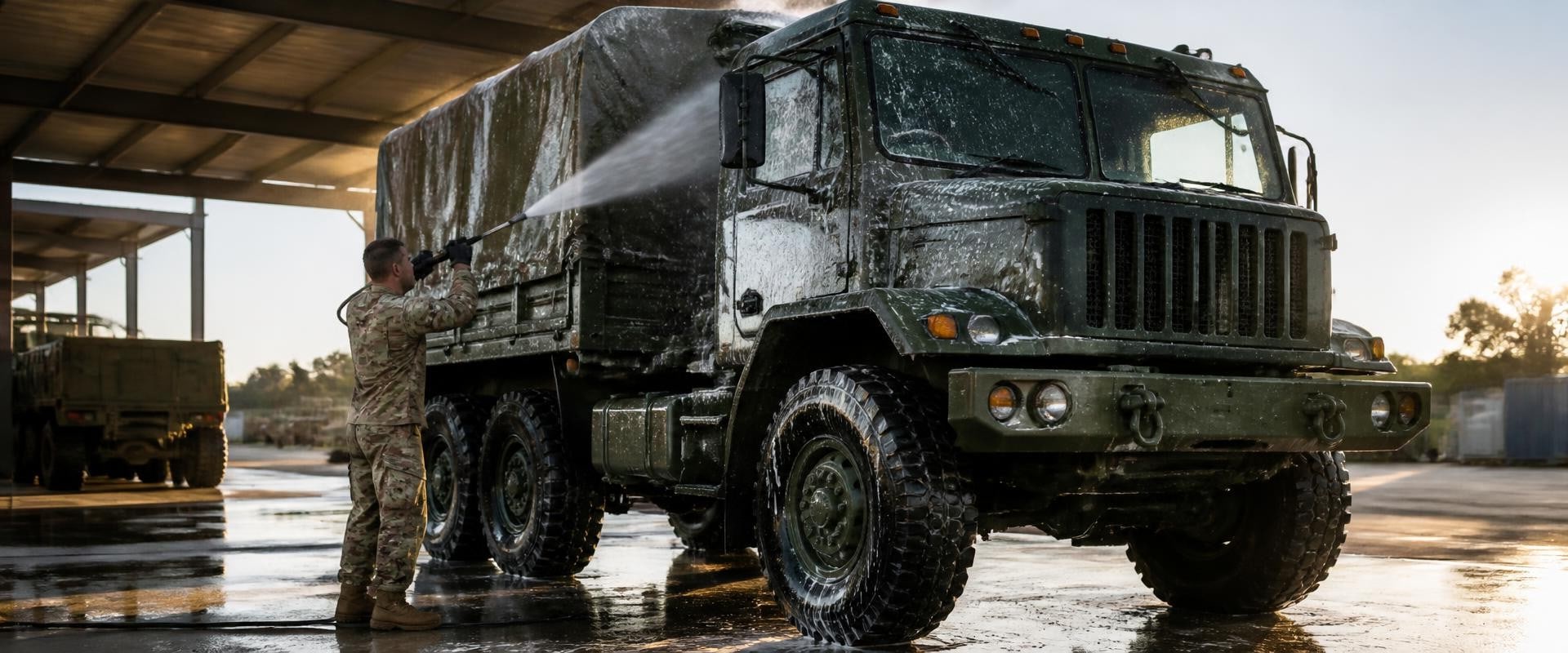
Military trucks are built to operate under demanding conditions, but their durability still depends on consistent maintenance. Routine inspections, lubrication, fluid checks, tire care, and mechanical servicing are essential, yet washing and cleaning should also be included in the maintenance schedule. Dirt, mud, dust, road salt, grease, and other contaminants can accumulate quickly on vehicles used in rough environments. Regular cleaning helps remove this buildup before it becomes difficult to manage. When appropriate for the truck’s size and configuration, services such as Cloud10 smartwash can be incorporated into a broader vehicle care routine to help keep exterior surfaces cleaner and easier to inspect.
Remove Mud and Road Grime Promptly
Military trucks frequently travel on unpaved roads, construction areas, training grounds, and other locations where mud and debris are unavoidable. Thick layers of grime can collect around wheel wells, suspension parts, bumpers, steps, and lower body panels. Allowing this buildup to remain for long periods may trap moisture and make inspections more difficult. Washing the truck after particularly muddy or dusty operations can help expose the condition of important exterior and undercarriage components. Heavy deposits should be removed carefully without directing excessive pressure toward sensitive connections or seals.
Pay Attention to the Undercarriage
The undercarriage is one of the most important areas to include in routine cleaning. Road salt, mud, sand, and moisture can collect around the frame, suspension, axles, and other metal components. These materials may contribute to corrosion if they remain in place for extended periods. Trucks operating in areas where roads are treated with salt or deicing chemicals may require more frequent undercarriage cleaning. Removing residue regularly can support protective coatings and make early signs of rust easier to identify.
Inspect Tires and Wheels During Cleaning
Washing provides a good opportunity to inspect tires and wheels. Drivers or maintenance personnel should look for uneven tread wear, cracks, cuts, embedded debris, damaged wheels, or unusual tire pressure issues. Mud packed around wheel assemblies can hide problems that might otherwise be visible during a routine walk-around. Cleaning these areas makes it easier to inspect lug nuts, wheel surfaces, and nearby suspension components. Tire pressure and tread depth should also be checked according to the truck’s operating requirements.
Protect Paint and Exterior Coatings
Paint and protective coatings help shield metal surfaces from environmental exposure, but these finishes can become damaged by chips, scratches, or prolonged contamination. After cleaning, inspect body panels, doors, bumpers, and lower exterior sections for areas where protective coatings have worn away. Small damaged areas may need attention before corrosion develops. Suitable automotive or fleet cleaning products should be used because harsh chemicals or abrasive tools can unnecessarily damage specialized finishes.
Keep the Cab Interior Clean
Maintenance should also include the interior. Dust, sand, food debris, moisture, and mud can accumulate inside the cab, particularly when trucks are used in field environments. Regular vacuuming and surface cleaning help maintain a more organized workspace for drivers and crews. Controls, switches, gauges, and display areas should be cleaned carefully without excessive moisture. Floor mats can be removed and washed separately, while frequently touched areas can be wiped with products appropriate for the material.
Check for Leaks After Washing
A clean truck can make mechanical leaks easier to identify. Dirt and grease may conceal signs of oil, coolant, fuel, or hydraulic fluid leakage. After washing and allowing the vehicle to dry, maintenance teams can inspect the engine area, drivetrain, undercarriage, and ground beneath the truck for fresh residue. Finding a leak early can help prevent a small maintenance issue from becoming a larger repair problem.
Support Reliability With Consistent Care
Routine washing should complement, not replace, scheduled mechanical maintenance. Military trucks still require regular fluid servicing, brake inspections, battery checks, tire maintenance, lubrication, and component testing. However, keeping the vehicle clean supports these tasks by improving visibility and reducing contaminant buildup. A maintenance program that combines mechanical inspections with exterior washing, undercarriage cleaning, interior care, and prompt attention to corrosion can help preserve the truck’s condition and support dependable operation over the long term.